
Report to Clean Virginia on
Climate Action Alliance of the Valley/Community Housing Partners
Energy Efficiency Outreach Project
August 2023 – May 2024
Bottom Line
- Clean Virginia awarded $35,000 grant to Climate Action Alliance of the Valley (CAAV) to support a local initiative to help potentially eligible community residents learn about and apply for no-cost weatherization and energy efficiency (EE) services to lower their energy bills.
- CAAV partnered with other local environmental non-profits and with Community Housing Partners Energy Services (CHP). CAAV used a Small-Grant RFP process to identify four local community service non-profits whose clients are potentially eligible for CHP services.
- These four organizations worked for five months to help their clients apply for CHP’s services.
- Through this grant, $35,000 has been converted into around $164,000 (Average job cost: $8,200) of tangible improvements for 20 energy-burdened homes. These improvements will save households money not just this month, or next month, but for the next 15+ years –saving residents hundreds of dollars each year on their energy bills.
- Critically, the funding through the Clean Virginia grant has helped spark an important ‘de-siloing’ of area organizations who serve low‑to‑moderate income (LMI) households in and around Harrisonburg. Centering energy burden with money to support agencies in signing up their clients to reduce it has not only helped connect important programs with households in need, but has helped us build a foundation for more cross-missional work.
Details
Background
CAAV’s mission is to limit the impact of humans on Earth’s climate and minimize the effects of inevitable climate change to protect the future for Earth and its inhabitants. Our vision is to create and nurture climate action in our Shenandoah Valley community so we can become a regional leader in promoting climate change mitigation and resilience. Our two primary goals:
Goal 1: Train and mobilize community members to engage in local and regional efforts that promote climate change mitigation and resilience.
Goal 2: Achieve policies and legislation that enable and advance the systemic changes required to promote climate stabilization and resilience. Founded in 2008, we are a small non-profit; we do not have official 501(c) (3) status.
Our project supported CHP)’s program to provide EE and weatherization services to low and middle income (LMI) residents of Harrisonburg, Rockingham County, and surrounding counties. This work is headed locally by CHP’s Outreach Coordinator Everett Brubaker. CHP coordinates over 20 income and age qualifying programs providing EE improvements and weatherization, as well as select home repair/improvements, throughout Virginia.
As funding at the Federal, State, and Utility levels for EE and weatherization programs has continued to grow, CHP sought assistance from local groups to assist in connecting LMI households to these programs. The initial effort was the result of CAAV’s joining with several other local non-profits to assist CHP in efforts to contact potentially eligible households. Other participating organizations were: Harrisonburg Unitarian Universalists (HUU), 50×25 Harrisonburg (50by25), and Shenandoah Valley Faith and Climate (SVFC). Many of the likely households eligible for CHP’s services experience multiple challenges that may make access to EE programs difficult, including barriers around language, mental or time capacity, awareness of programs, distrust of federally funded programs, and more. The coalition that came together determined that the best way to advance EE in our community with the Clean Virginia grant funds was to support building capacity at existing non-profit community organizations. Such organizations have direct ties to and involvement and credibility with those individuals CHP seeks to assist. The initial effort was funded by a one-time grant of $3,500 from HUU. We entered into an agreement with COSPU (Comité Salvadoreño Paisanos Unidos), a local non‑profit that serves our large Hispanic community.
Based on the results of COSPU’s prior, briefer effort in 2023, CAAV concluded that more time, more money, and more organizations were needed to reach adequate numbers of potentially eligible households. Clean Virginia awarded CAAV the requested $35,000 grant to enable further development of a model.
Grant Distribution Process
CAAV consulted with several local non-profits and then developed a Request for Proposals (RFP) for interested non-profits to submit. We identified about 35 organizations in the Central Shenandoah Valley that serve disadvantaged renters and homeowners. Using several criteria to assess the efficacy of the proposals received, CAAV selected four organizations on November 29, 2023 to receive grant funding to connect their members with CHP Energy Solutions’ Programs. The organizations selected were:
- Comité Salvadoreño Paisanos Unidos (COSPU)
- Friendship Industries Inc./Able Solutions Inc.
- United Way of Harrisonburg & Rockingham County
- Valley Program for Aging Services
These organizations serve populations of varying sizes and their client loads vary from relatively small to fairly large. Based on their individual requests and client workloads, CAAV distributed the grant money in early January 2024. From January through May 2024, each organization provided outreach to their clients to encourage and help them apply for CHP services. CAAV and CHP provided training and guidance throughout the process. The recipient organizations submitted periodic reports.
Outreach Efforts
Each organization developed its own approaches. CHP provided English and Spanish language materials (see included examples) and the area outreach coordinator conducted several meetings and training sessions. Approaches varied and included:
- Notices on social media, emails, letters, and personal contacts.
- Tabling at events.
- Case manager contacts with individual clients.
During this time, CHP’s outreach coordinator helped to “spread the word” further via local TV stories, other media news articles, and by inviting the organizations to visit local CHP worksites to better understand the weatherization and EE improvements it was providing. CAAV project team members were also interviewed, as were some of the participating organizations’ leaders.
Selected Coverage of the 4-month Effort:
Local News Coverage of Clean Virginia Grant to CAAV: https://www.whsv.com/2024/01/12/climate-organization-gives-35000-grant-affordable-electric-bill-project/
National Highlight of Effort by Energy News Network (3 25 24) and Nexus Hot News (3 26 24):
https://energynews.us/2024/03/25/look-for-the-helpers-virginia-climate-volunteers-connect-with-service-providers-on-weatherization-effort/
https://nexusmedianews.com/author/nexus/
Facebook Post Highlighting United Way Visit to CHP Weatherization Project in Harrisonburg: https://www.facebook.com/UnitedWayHR/posts/pfbid02RB5cKNPCC9ieNKMB6spJoaBVH6Xvj7KWcfmokmckAJWpwrp6FackK2VJCXArJRLBl
A Community Spotlight Video by Kline May Realty Highlighting Weatherization with CHP ES Director Meghan McMillen: https://www.youtube.com/watch?v=7jmApeT_vgU&ab_channel=KlineMayRealty
Results
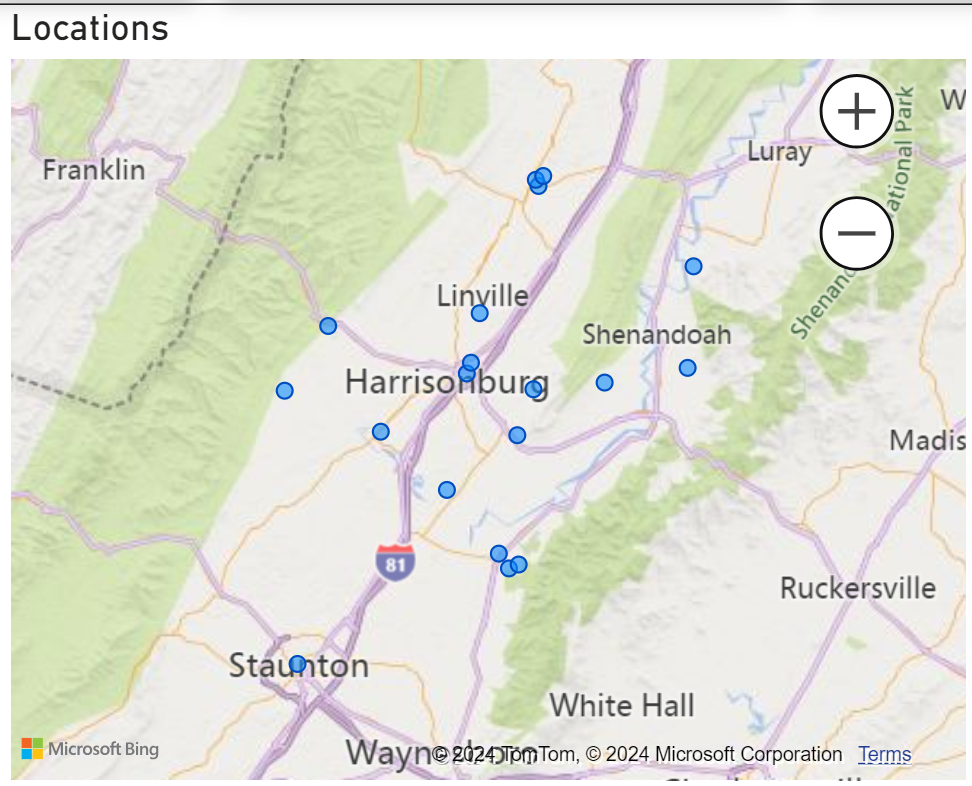
From January through May 2024, the four grant-supported organizations meaningfully connected with dozens of households across their respective footprints. Through one-on-one meetings, phone calls, events, and more, they successfully assisted 24 households in applying for programs through CHP. Of those 24 households, 12 have been approved with another 7 eligible, but submitting final documentation.
We anticipate 20 households receiving services as a direct result of this grant‑funded outreach effort. Based on CHP data from 2023 for single family homes served in Central Virginia, along with national surveys, we expect each household to realize average projected savings* of $61 per Month, $723 Per Year, $12,800 Lifetime.** Across all 20 households, we expect total average projected savings of $1,220 per Month, $14,460 per Year, $$256,000 Lifetime.
* Savings are calculated through a DoE Approved Modeling Software that utilizes specific household data for each individual measure installed and the state approved average fuel costs. Savings may also include improvements funded through additional programs, such as LIHEAP and utility-sponsored programs. Actual realized savings are impacted by climate, seasonal changes, and resident behavior. For more on how Savings to Investment Ratio (SIR) is calculated and other operational requirements in Virginia related to Weatherization, see: https://www.dhcd.virginia.gov/sites/default/files/Docx/weatherization/wap-operations-manual.pdf
** Lifetime refers to the average lifespan of the installed measures, averaging 15-20 years across all installed measures)
Every home that qualifies for weatherization through CHP receives a comprehensive energy audit prior to work being completed. Performed by a BPI certified energy auditor, this audit provides the foundation and modeling that determine what measures can be installed at a client’s home. With a few exceptions often related to health, safety, and funding source, every measure, from pipe wrap and insulation, to LEDs and Heat Pump Installs, must pay for itself at least once in realized household savings over the lifetime of the measure. For example, if insulation costs $2,000 to install and has a lifetime of 15 years, that client must save at least $2,000 in energy costs over 15 years to justify installation of that measure. All savings are projected via a comprehensive modeling software managed by the state of Virginia. This software allows CHP to provide data-driven savings estimates for households.
Additional Improvements:
With over half of homes usually needing additional home improvements and upgrades before receiving EE improvements, another $150,000 to 200,000 (Across 10+ homes) is expected to be invested in HVAC, roof, plumbing, and environmental remediation. This work improves the health, safety, and affordability of those homes, and helps keep needed housing stock available.
Lessons Learned
- Non-profits have budget, time, and staff constraints that, despite grant funding, limited their outreach efforts, especially because of the relatively short time period.
- Non-profit staff were quick to understand the implications of their clients’ reduced energy bills.
- CAAV and partner non-profits were both heartened by the opportunity the grant money and the outreach presented and daunted by the scope of the effort, though enthusiastic about anticipated outcomes.
- Non-profit staff, despite their ongoing relationships with clients they approached, met with some skepticism about the “no-cost-to-you” aspect of the CHP programs. There was also some hesitation from client renters, and concern about ‘bothering’ their landlord, or how their landlords might perceive the program/ask.
- Despite CHP’s and the non-profit organizations’ efforts to streamline, explain, assist, and follow-up with clients during the application process, clients’ response times and rates were below what had been hoped for. CHP’s further follow-up efforts with applicants were too often not successful and some applications were closed without completion.
Conclusions
Even with the constraints and learnings listed above, the four organizations supported through this grant were able to line up 20 households for EE and other home improvements through CHP. With an average investment of $8,200 per home, this grant will invest $164,000 in EE improvements to LMI households in the Valley. With over half of homes usually needing additional home improvements and upgrades before receiving EE improvements, another $200,000 ($20,00/home across 10 homes) is expected to be invested in HVAC, roof, plumbing, and environmental remediation.
There was significant learning through this process, with unexpected challenges and constraints that will help inform future efforts. First we will need to focus more on effective methods to address and overcome cultural and language barriers in target populations. We recognize that more consistent follow up with households is critical to reach approval, and we began exploring ways to address client attrition. We also recognized a significant need to fund administrative work and communications tasks that are part of administering a grant like this. Finally, more time is needed, and seasonality matters, as our outreach missed many of the summer events and good weather that help support effective outreach.
Finally, the funding through the Clean Virginia grant has really helped spark a ‘de-siloing’ of area organizations who serve LMI households in Harrisonburg. Agencies with specific missions serving seniors, immigrants, persons with disabilities, and other populations have begun connecting and collaborating in important ways. Centering energy burden with money to support agencies in signing up their clients to reduce it has not only helped connect important programs with households in need, but has helped us build a foundation for more cross-missional work. This work is critical as both needs and funding increase.
Every agency we worked with has momentum and interest in building on this work. A case manager with Valley Program for Aging Services shared, “Thanks to this grant I was able to offer my clients a solution to their energy/weatherization problems rather than throwing money toward over inflated energy bills due to poor insulation and equipment. I have had several clients come back to me after receiving services from CHP stating they have experienced a drastic reduction in their energy bills and are enjoying being able to use their home’s heating and cooling systems without worrying about high energy bills.”
We are excited to build on this momentum as we look toward additional funding.
Respectfully submitted,
Joy Loving on behalf of Climate Action Alliance of the Valley
June 7, 2024
PDF version here: https://climateactionallianceofthevalley.org/wp-content/uploads/2024/06/2024-clean-virginia-report.pdf